Upliftment

When Rs.6,200 Has to Carry a Family

What can a family do with ₹6,200 a month? For some families in North Chennai, that is not a theoretical question. For the women we met, Rs. 6,200 has to cover food, school fees, medicines, rent and whatever else the month brings!

And when something unexpected happens? Borrow. Get into a debt spiral.

Where and how do you begin the transformation? You begin small—and together.

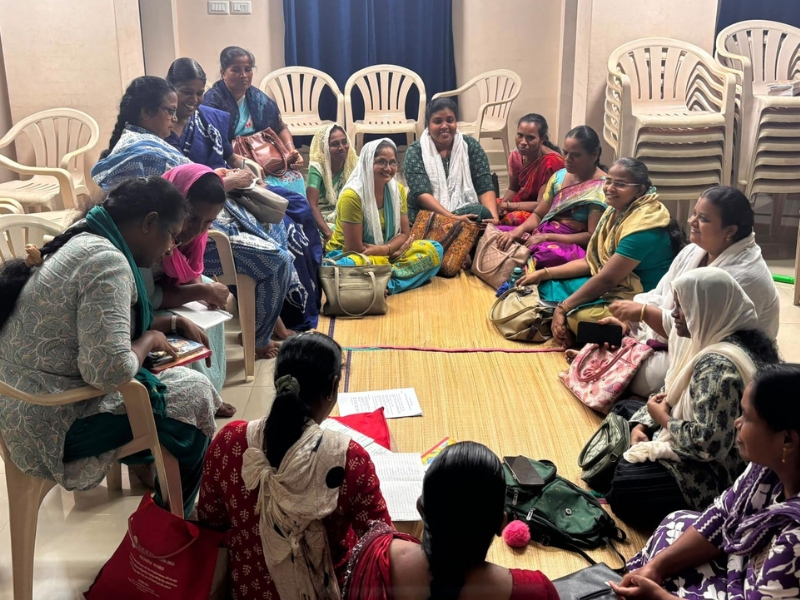
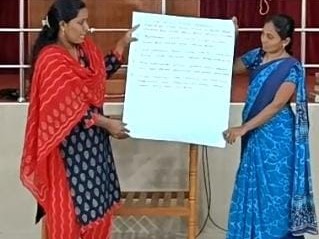
So, OSF, with a women’s empowerment expert, conducted two levels of training on 28 May and 5 August 2026. 32 women completed Level 1, learning household budgeting, regular saving, confidence-building and the basics of Self-Help Groups. 18 women wanted to carry on and moved to Level 2, learning how to actually run a group.

Their lived reality tells the story:

  • 52% carried the main responsibility for their households, with incomes coming largely from low-paid informal work such as housekeeping, sweeping and street vending.
  • 25% were caring for a bedridden spouse or disabled dependent.
  • 68% were supporting children or young people in school or college. Medical emergencies and education costs often pushed families into high-interest debt.

As part of the SHG, the women will scale up and learn to maintain savings ledgers and passbooks, record attendance, issue receipts and document loans. The groups will also provide a platform for developing practical livelihood skills, health, hygiene and more.

But the real test comes after the training. Would the groups continue on their own? They did.

The women have now formed their own Self-Help Groups and agreed to meet every week. They save together, maintain their own records and are building a common emergency fund. This gives the members a way to meet urgent medical or educational expenses without immediately turning to moneylenders.

It is a small beginning. A weekly meeting. A little money saved. Regularly.
Women learning to manage it themselves.

But something important is changing. Women who once faced financial shocks alone are beginning to face them together. And that may be the first step from simply surviving each month to building a more secure future.

Read more

Just in Time

In one of OSF’s intervention villages at Koraput in Odisha, a family was preparing for marriage of their son.

The boy was aged below 18 years and illiterate. His to-be life partner was from an adjoining village; her age was around 16 years and she was illiterate as well. Almost 70% arrangements were completed for the marriage.

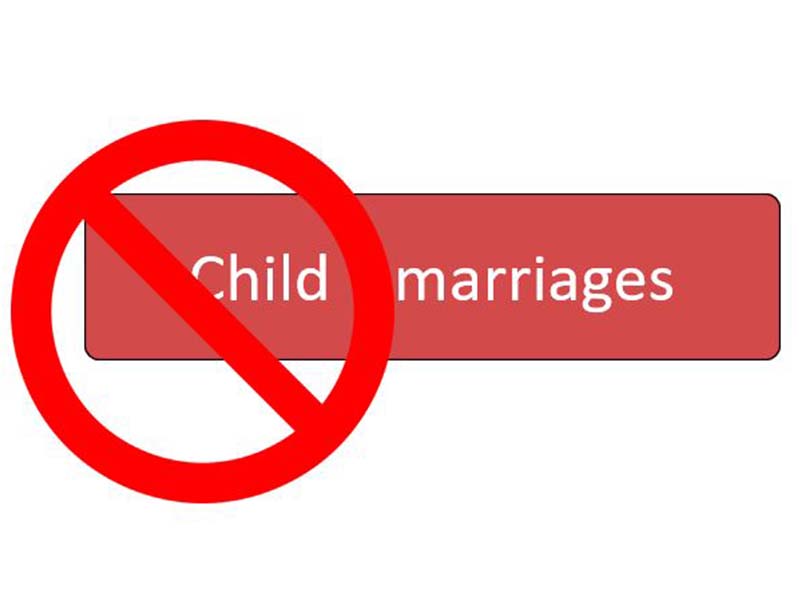
But the decision taken by the village leaders who attended a gender program organized by OSF played a major role in thwarting this child marriage. They conveyed that it was unlawful to proceed with the wedding. The boy and his family understood and the marriage was indefinitely postponed. It was decided that the wedding could be solemnized after they reach the marriageable age. The decision was communicated to the bride’s house and the program was cancelled on mutual understanding.

When we involve in community work, such avoidable social issues come to our attention. The tribal communities face a lot of problems, like poor health conditions, dropouts from school and low socio-economic status due to child marriages. Many don’t aspire to get to higher studies and they are unable to intellectually contribute to the community development.

OSF started this intervention in March 2021 with a workshop for the village leaders to discuss the issue of early marriage. This was the first program for the area and for the communities. In the workshop there was a free and fair exchange on the topic and we conveyed the government guidelines for marriage age and the negative social impact for their communities. The leaders sensed the gravity of the issue and promised to align to the age guidelines.

Further, the participant leaders conducted meetings on this topic in their respective villages. They advised the families to follow Govt directions and not to encourage marriage proposals involving under-aged children.

Read more

Aiming High

Radhika Himeraka is from Bada Bankidi in Koraput District in Odisha. Her parents passed away in her childhood. At that time, she couldn’t get proper schooling and now she lives with her sister in the village. She was a daily wage laborer.

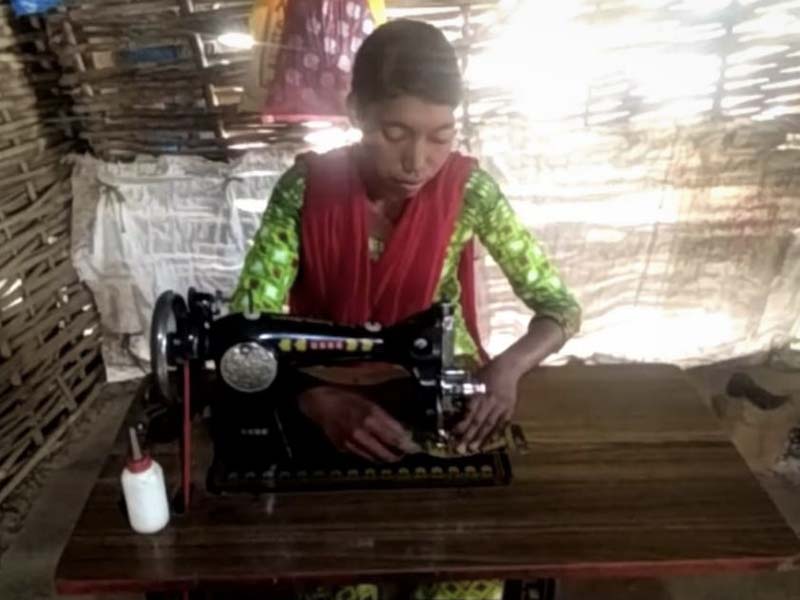
Radhika has successfully finished a tailoring training course which was organized in their village by Operation Sahay Foundation. “I am very thankful to OSF. Because I have no parents, I was uneducated and was unworthy to join the training but OSF provided the tailoring course in my village!”

Now she does part-time tailoring and gets about 3 customers a week from her village. She is able to stitch ladies’ dresses, blouses, kids wear and work on old clothes. It is an alternate source of income and Radhika could cut down on the hard work as a field laborer.

On her future plans — “I would like to start a tailoring centre, perhaps with some of my friends.”

Read more

Well Settled

Rani Meleka lives in Tikarapada village in Koraput District. She couldn’t get proper education in her childhood. Husband is a tractor driver and they have young child. His job is farm dependent and so it’s a seasonal income for the family. Often, it’s a struggle to keep the family afloat.

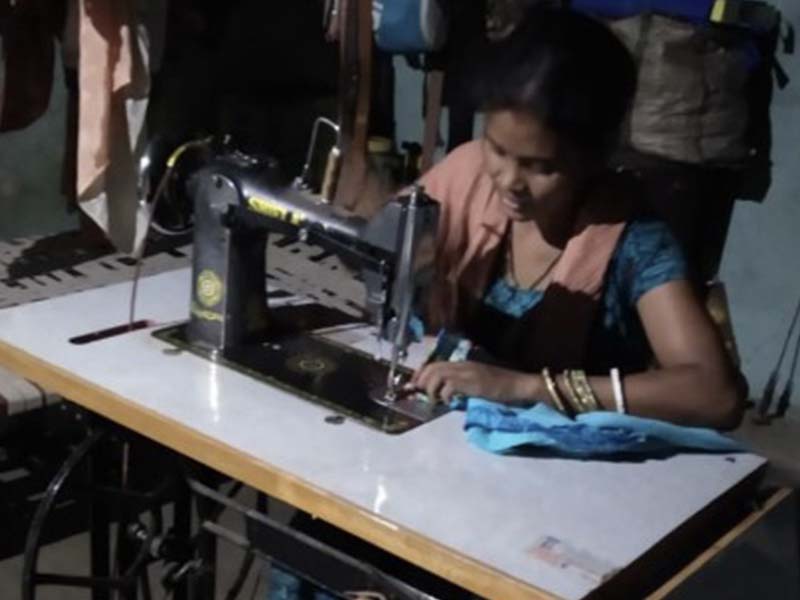
Operation Sahay Foundation opened a skill development centre near to their village. Rani joined the centre to learn stitching with an intent to have a consistent source of income. It was a little difficult to learn tailoring with her meagre educational background but coped up with the help of a perseverant teacher and hard work. Now she has successfully completed the course and earned a certificate. She and her family are happy as she bought a machine with some savings and is now stitching clothes.

Rani specializes in blouses and all ladies’ garments. She gets 5-6 customers a week from the villages near her. Now she is able to earn roughly Rs.1200 a week. This is a big boost to her family income. She says “I am grateful to OSF for providing the tailoring training near my village. It supported me financially and owing to this I am able to fulfill the needs of my family being able to stitch my own clothes and other’s clothes as well.

Read more